The Colony That the Earth Swallowed
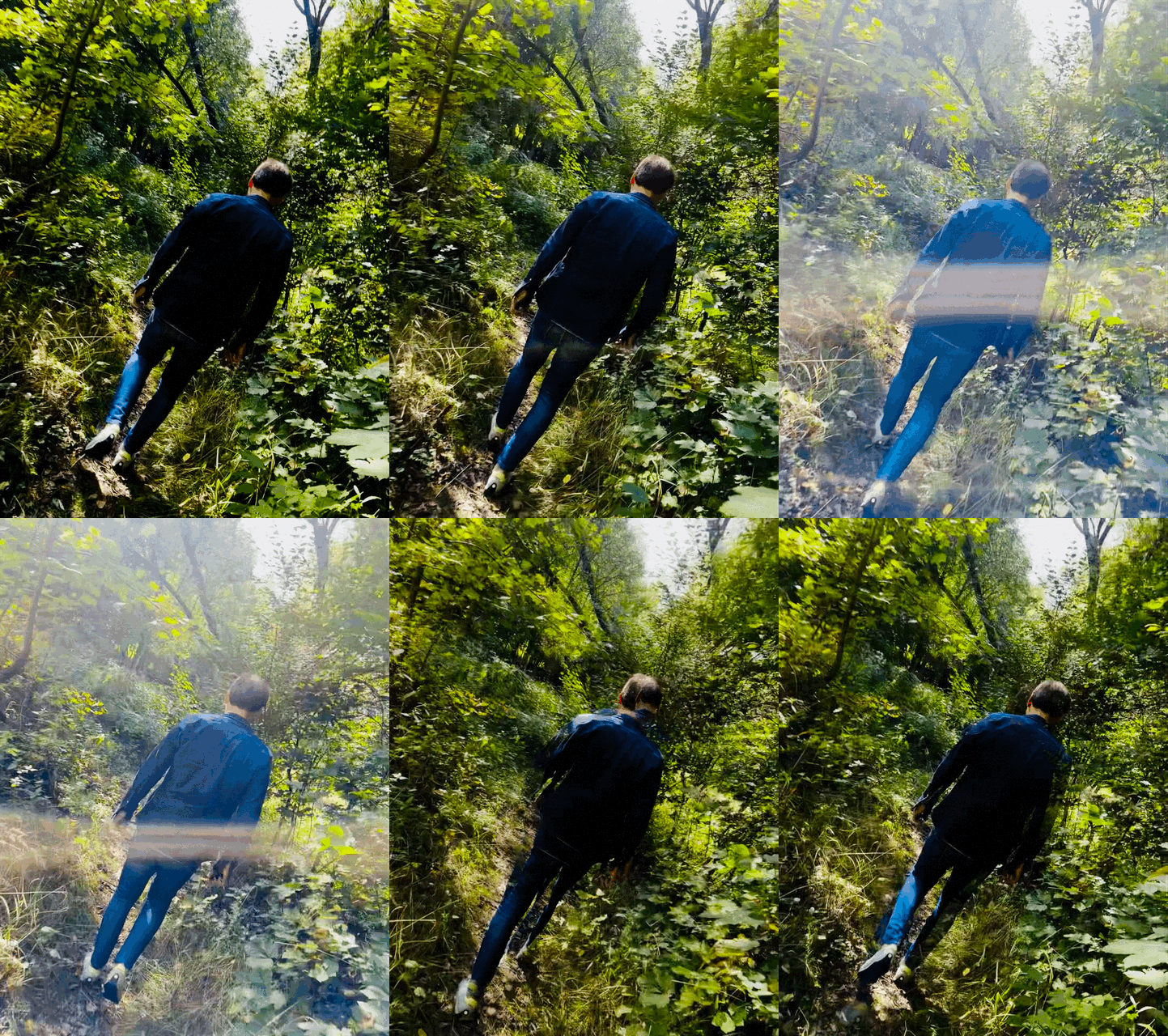
The name sounds surreal. Mexico? Right in the middle of the Czech-Polish border region? My friend, expedition leader@Jiří Staš, explains it to me as we make our way through the greenery: In the late 19th and early 20th centuries, miners often named their settlements after faraway places—there was “Nový Jork” (New York) and, indeed, “Mexiko.” Thousands of people lived here, crammed together, their lives shaped by coal mining.
Today, nothing remains of it. Where workers’ houses once stood, a dense forest now grows. This is the result of an extreme phenomenon common to old industrial areas: massive land subsidence caused by decades of underground mining. The ground gave way, and the settlement had to be evacuated and demolished in the 1970s. Only a single building remained in the thicket.
Eternal Life Only in Death
While the houses of the living were torn down stone by stone and sank into the ground, the city of the dead—at least in its fragments—remained standing. It is a grim irony of industrial history: in the end, eternal life here existed only in death.
Foucault’s Cemetery
For me, as someone who explores spaces and structures, this area is essentially what the philosopher Michel Foucault called a heterotopia —one of those “other places” that exist outside of everyday space and yet form a profoundly real counterpoint to normal society. At the time, Foucault cited the cemetery as a prime example.
And Karviná-Mexico takes this concept to the extreme: it is a physically real space that has its own distinct timeline—a heterochrony. A place where the era of industrialization has been frozen in time, while outside, the forest has taken over and various political systems have risen, fallen, and evolved.
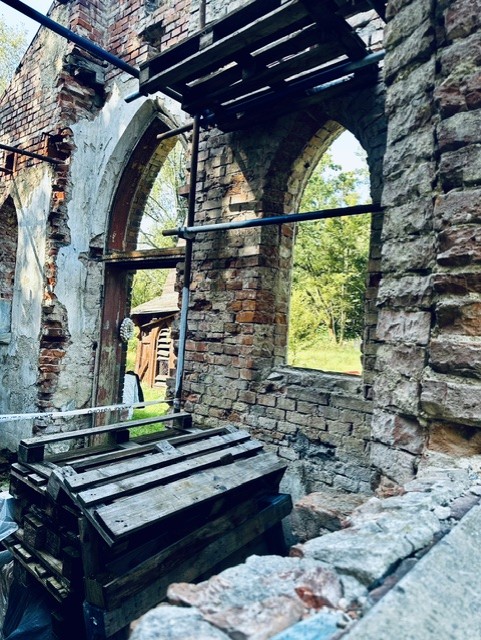
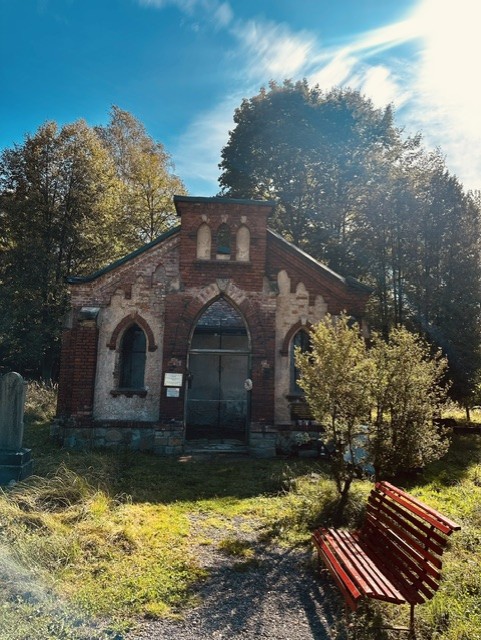
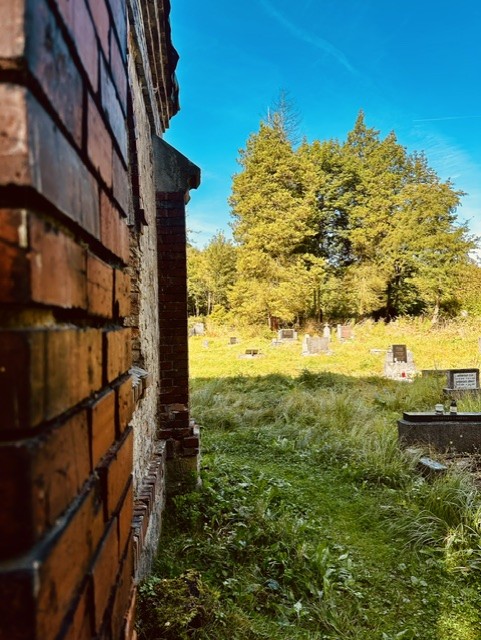
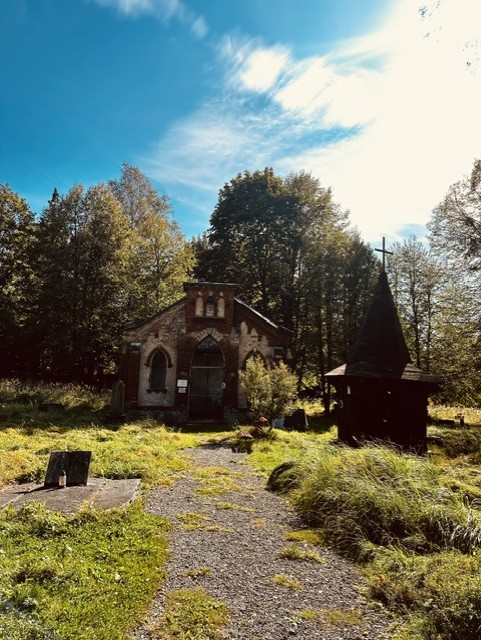
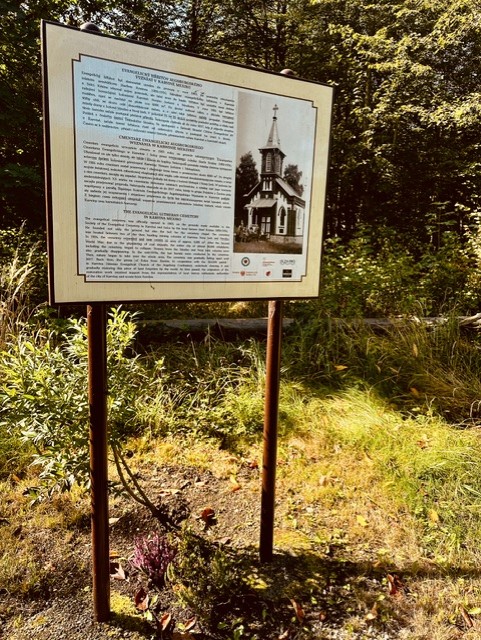
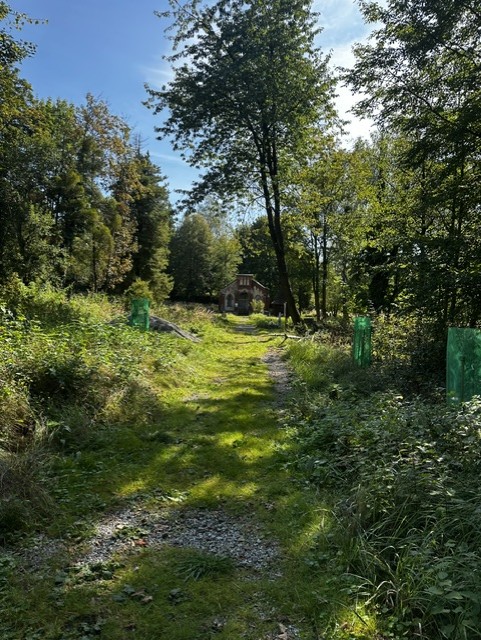
As we make our way through the dense, almost jungle-like undergrowth, we suddenly find ourselves standing in front of it: the ruins of the cemetery chapel from 1906.
Its brick walls have withstood the elements for decades, but the roof is completely gone—now the view of the sky is unobstructed. Where church pews once stood, young birch trees now grow tall. Nature has relentlessly reclaimed its territory and is renewing itself.
R.I.P.
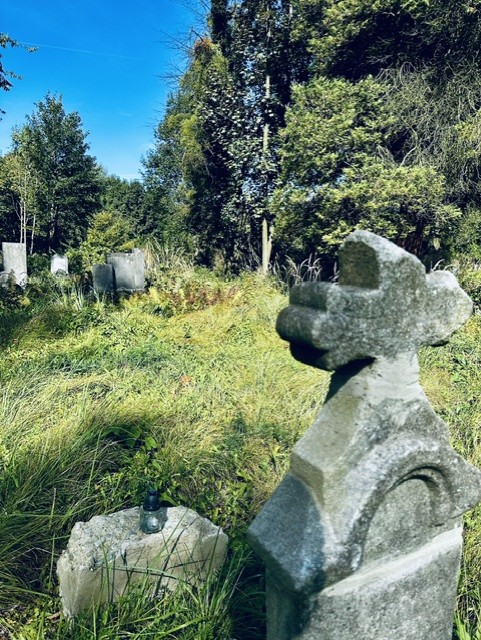
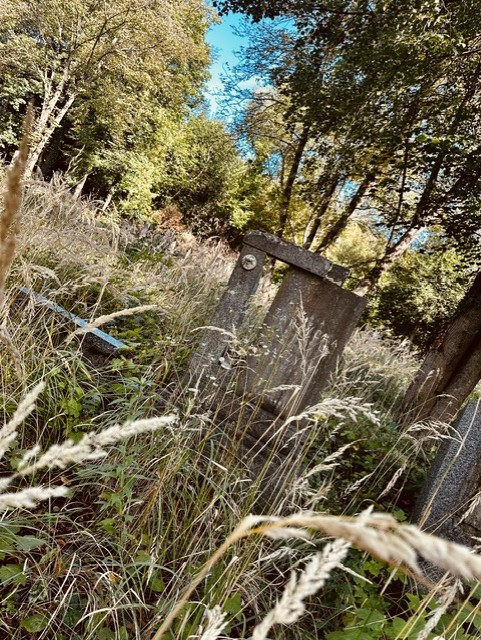
Hidden beneath the dense ferns and moss, several hundred people are buried here. They are miners and their families, but also many victims of tragic mining accidents. Weathered iron crosses protrude from among the tree roots. Monumental headstones with bilingual inscriptions—in German and Polish—tell the stories of those who toiled and died here for the sake of industrial growth.
The Treasure Hunters of Structural Change
The present looks hopeful. The resting place will not simply be left to fall into ruin.
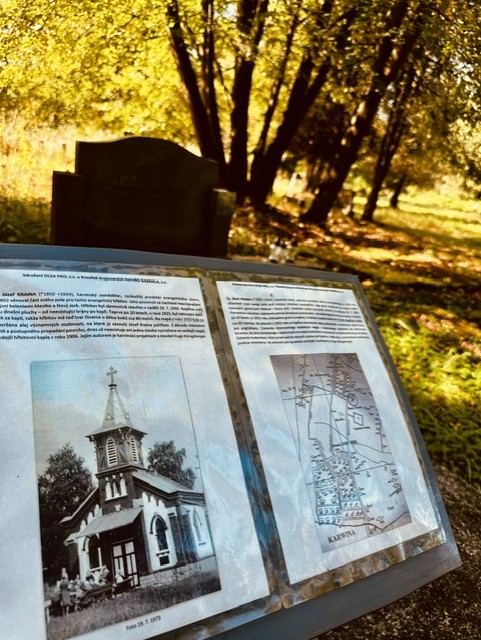
Deep in the forest, we came across traces left by relatives and modern preservationists. For several years now, local Czech-Polish citizen initiatives have been working their way through the thicket with machetes and shovels. They are securing the chapel to prevent it from collapsing and carefully uncovering the graves again.
Golden energy amid lush greenery.
This reveals an intriguing phenomenon: Sometimes, true social value lies in allowing nature to take its course, halting decay, honoring history and the people who lived it, and thereby creating a magical place with its own aura and atmosphere at the crossroads between the past and the future.
Thank you very much for this opportunity
We at CMb.Industries would like to thank the organizers of the MSID Brownfield Conference for the opportunity to discover this magical place, its people, and its history.
Vaclav Palickal Jiri Stas Lenka Haas Karel Bařinka Erik Stefanovic Kofola Czech Republic and Slovakia Petr Březina Radim Kaller Jan Hana Svatava Ozdincová Lenka Odstrčilová Barbara VojvodíkováSvětlana Krettková Ondřej Čáp Šárka Šimoňáková Iva Poláková
#MSID #Brownfield #BrownfieldDevelopment #Structural Change #Karviná #Ostrava #Church#Czech Republic #Mining #Industrial History #Historic Preservation #Regional Development#CMbIndustries #Real Estate Dramatization