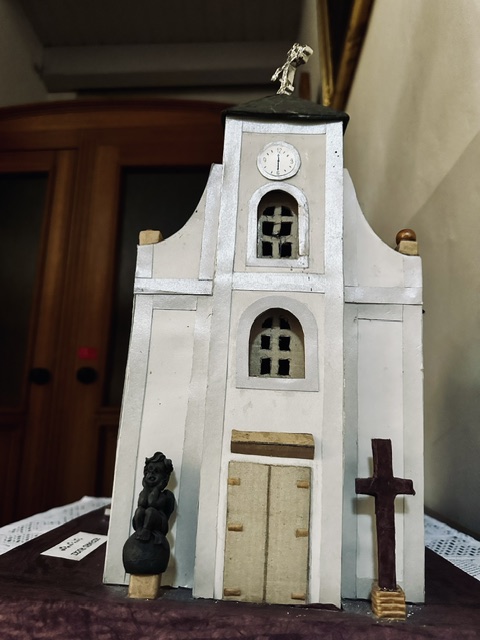
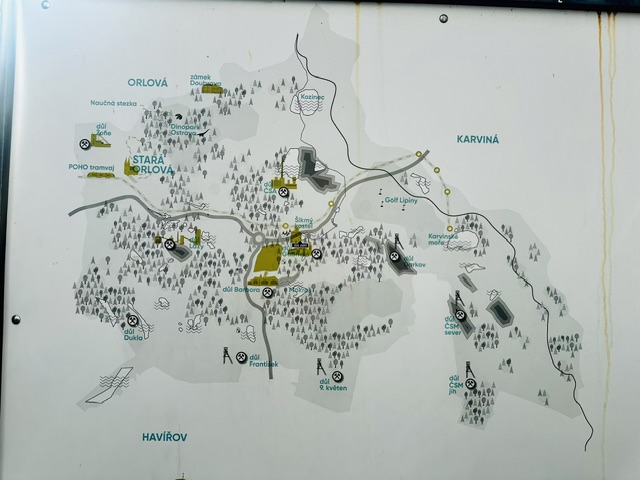
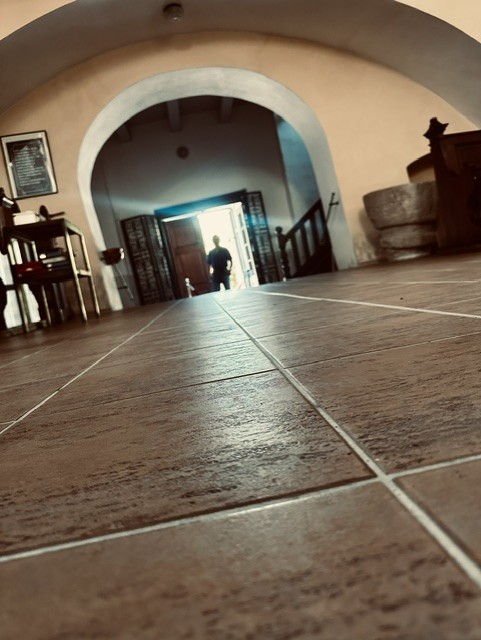
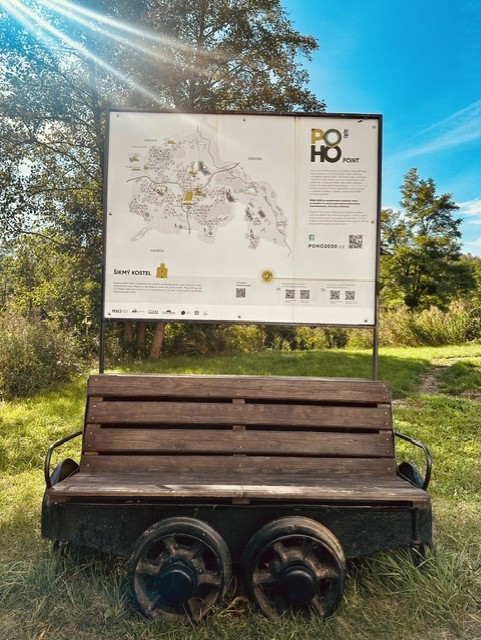
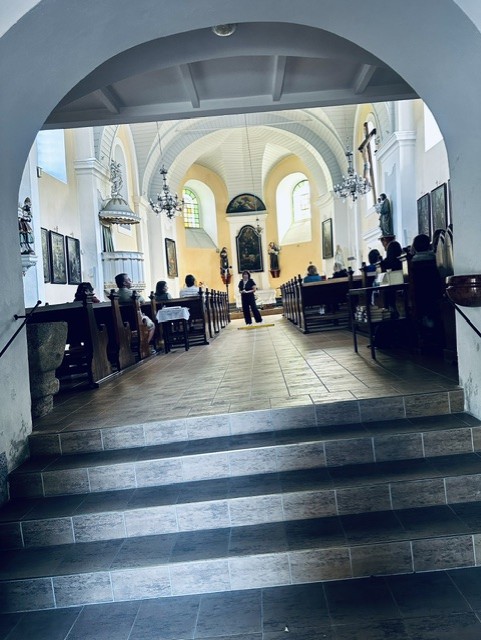
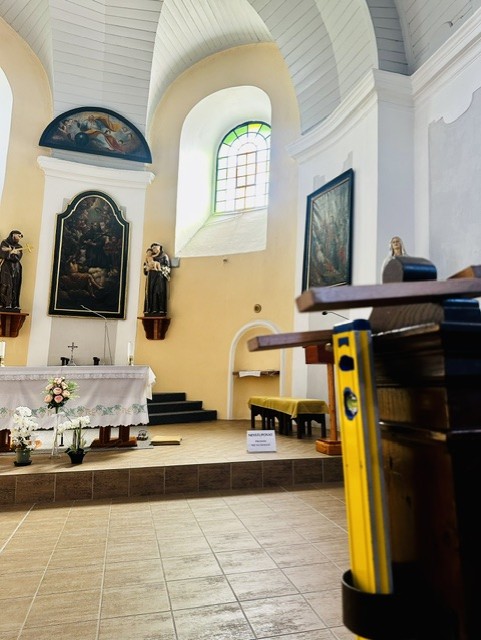
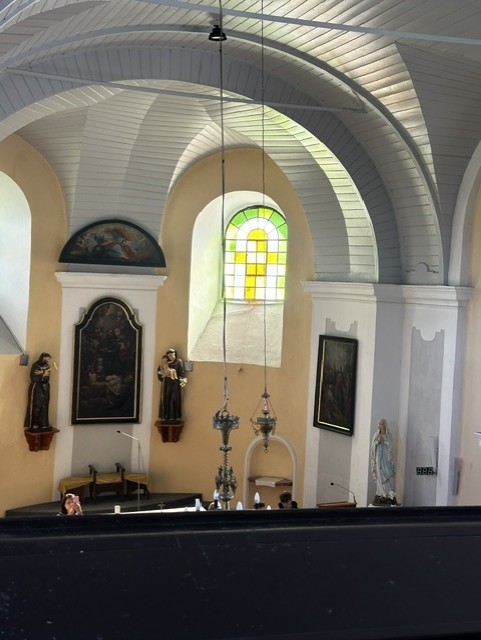
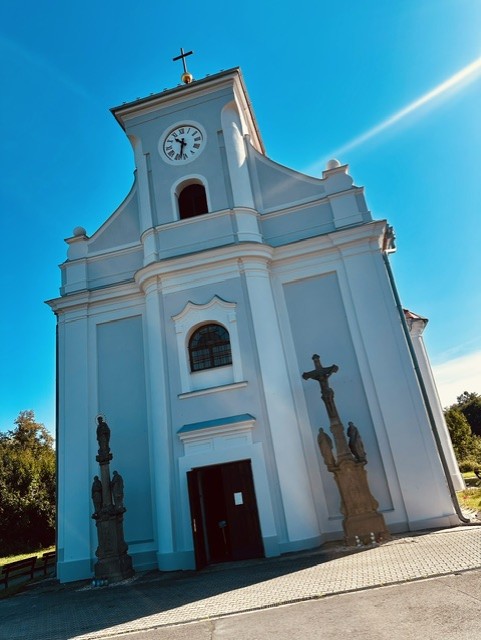
Amid this largely deserted, overgrown landscape, the leaning Church of St. Peter of Alcantara in Karviná-Doly stands out.
That is why it is also referred to as the “Czech Pisa.” However, this comparison is flawed, because the town that once surrounded the church no longer exists. Pisa still exists, whereas Karvinná fell victim to industrial sprawl.
The Leaning Tower of Pisa began to tilt even during its construction in the 12th century due to incorrect assumptions about the foundation. The church in Karvinná, on the other hand, stands firm in the face of the consequences of coal capitalism in the former communist Czechoslovakia.
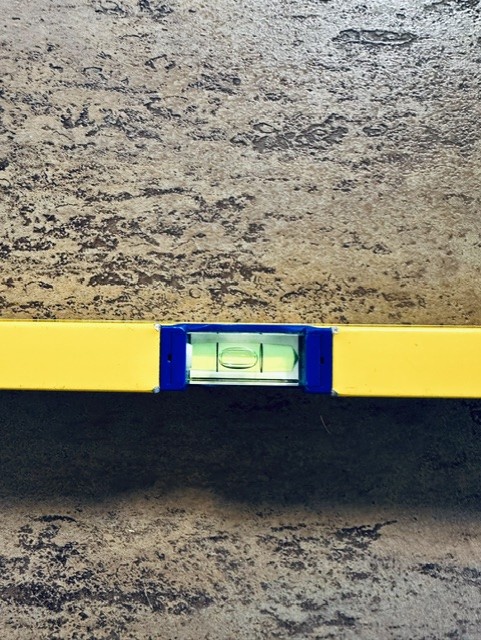
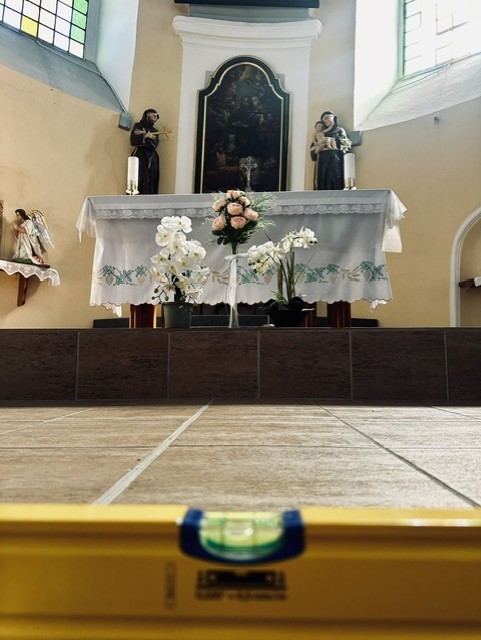
To me, that makes it an even more significant symbol of resistance—and not just in a figurative sense: At 6.8 degrees, it leans much more than the famous Leaning Tower of Pisa, which leans about 3.9 degrees.
The Extinction.
The real story, however, does not begin with the leaning church, but with a city that no longer exists.
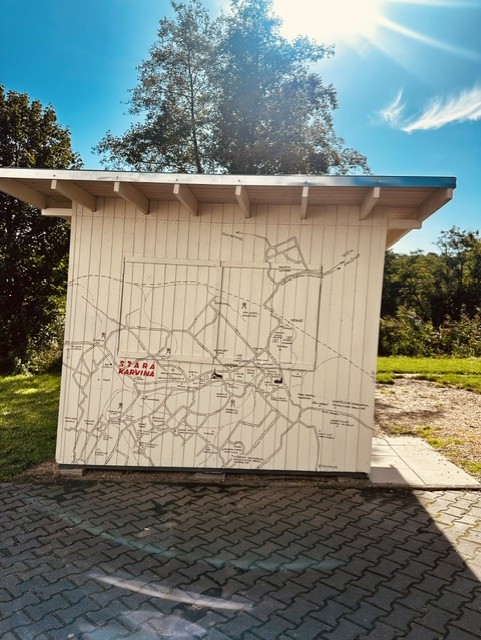
Karvinná was a town with nearly 30,000 residents and more than 1,800 houses. It had a town hall, a train station, a savings bank, a brewery, cultural centers, a monastery school, and a large church that could accommodate about 4,000 worshippers.
By way of comparison: In terms of size, this vanished city would be comparable to the Austrian cities of Bregenz, Leonding, Klosterneuburg, Baden bei Wien, Traun, Wolfsberg, or Leoben. And while these cities are still more or less bustling with people and teeming with life, Karvinná is remembered today primarily through photographs, fragments, and stories—such as this one.
Cavity and Hell’s Maw.
In the 19th century, the region around Ostrava and Karviná developed into a major center of coal mining. Coal was even mined directly beneath the Baroque church. The consequences were severe: due to the underground cavities, the earth’s surface sank over the course of decades—by a total of an incredible 40 meters toward the abyss. The church sank along with it, leaning more and more to one side.
Gottesmann was just leaving; the crooked church remained.
In the early 1990s, its structural integrity was so severely compromised that it was even in danger of being demolished. The fact that it still stands today is thanks to a miracle and to the pastor at the time, Ernest Dostál, who fought vehemently for its preservation.
Give me some coal!
Mining companies agreed to finance the restoration with ten million kroner. In 1994, the church was stabilized, thus creating a symbol—a symbol whose bells still ring out to call the faithful to Mass today.
Storydoing.
Symbols mean more to a society than buildings, stones, or monuments. They give shape to a shared history. They preserve memories, foster a sense of identity, and connect the past, present, and future. They provide strength and motivation.
Golden Energy.
Here at CMb.Industries, we know this: Building materials contain “gray energy.” “Golden energy” arises from the stories we preserve—and from the meaning we ascribe to them for the future. It is the mortar that holds a society together.
We at CMb.Industries would like to thank the organizers of the MSID Brownfield Conference for giving us the opportunity to discover this magical place, its people, and its history.
#MSID #Brownfield #BrownfieldDevelopment #StructuralChange #Karviná #Ostrava #Church #Czech Republic #Mining #IndustrialHistory #HistoricPreservation #RegionalDevelopment #Faith #CMbIndustries #RealEstateDramatization